---EN---
If you are considering concrete decisions or situations in your company, here is a piece focused on how they are defined and handled in practice.
Automating with AI Beyond Chat Interfaces: What to Solve and What to Avoid →At the core, an AI chatbot is automation: it takes a customer’s message, interprets it, and gives a coherent response without you needing to step in. That’s an automated process. What got automated? A conversation.
A similar type of automation is answering emails: the customer requests a catalog, asks about a price, or checks if an item is in stock. The AI works the same way: it takes the message, interprets it, and replies accordingly. The only difference is swapping chat for email.
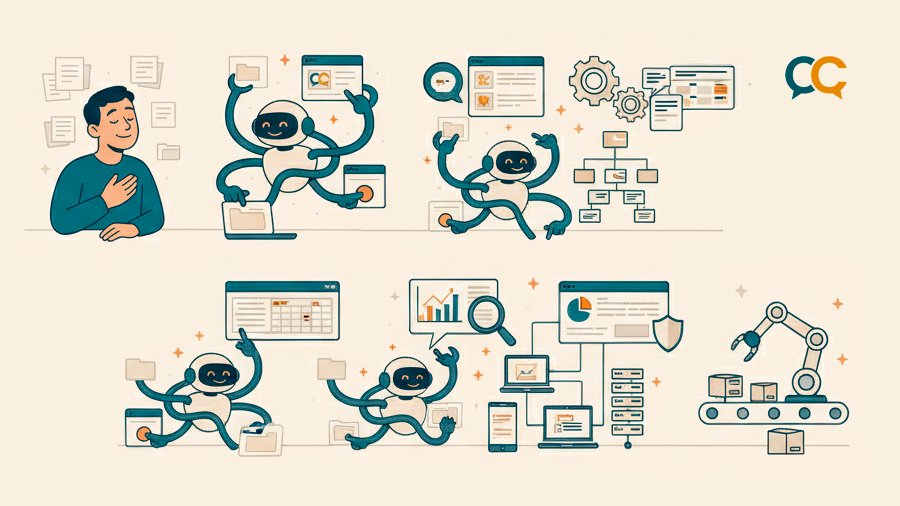
But it’s not all talk. Just like a chatbot automates a conversation, you can automate many other processes in a company. Some examples:
- Send form data directly into the CRM: no copy-paste, everything goes to the right place. Generate weekly reports: sales, expenses, or metrics, without anyone manually building spreadsheets.
- The benefit is the same as with chatbots: let AI handle repetitive tasks or out-of-hours work, while your team focuses on what’s truly valuable and productive.
More examples:
- Automatically classify complaints and route them to the right department.
- Consolidate information from different spreadsheets into a single dashboard.
- Send alerts when a key metric rises or falls more than expected.
Automation matters when it solves concrete problems and frees up real time. Every process that runs on its own is less load for your team and more room for your company to grow.
And of course, there are more cases — including the one you might think of that I wouldn’t, because you know your company’s needs best.
---EN---
If you are considering concrete decisions or situations in your company, here is a piece focused on how they are defined and handled in practice.
Automating with AI Beyond Chat Interfaces: What to Solve and What to Avoid →